Most Phone Use Is on Wi-Fi. So What Does a New Carrier Really Need to Build?
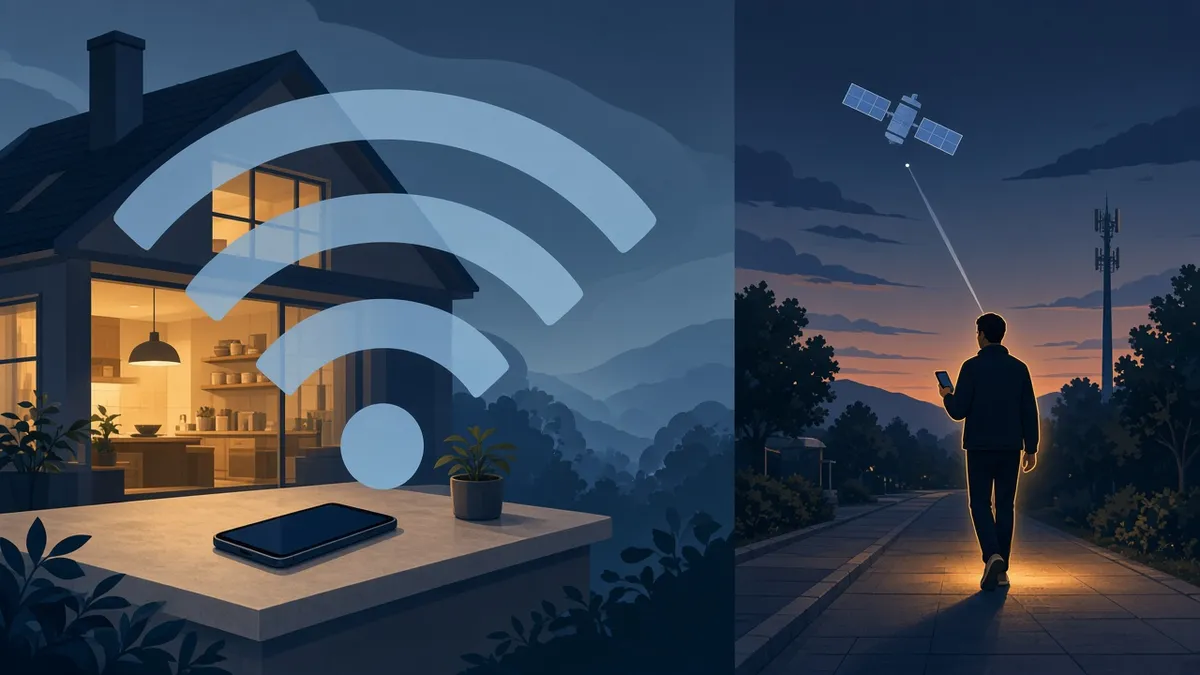
Most of what we do on our phones happens on Wi-Fi. On its Q3 call, SpaceX's president and chief operating officer said somewhere between 85% and 93% of mobile use is on Wi-Fi. Comcast said on its call that about 90% of Xfinity Mobile traffic travels over Wi-Fi. This builds on my earlier posts about Starlink Mobile, and it changes how I think about what a new carrier has to build.
If nearly all use is on Wi-Fi, a new carrier does not have to cover everything everywhere. The slow step is the slice of use away from Wi-Fi, when someone is moving, outdoors, or inside a building with no Wi-Fi. That is where the money should go, and only there.
SpaceX described a plan that fits. It expects its satellite spectrum to carry most of the use that is off Wi-Fi, and the low-band spectrum it has agreed to buy is meant to reach people inside buildings. Comcast shows the other side. It rents its network from other carriers and has no spectrum or towers of its own, so a free line needs no network capital spending from Comcast.
Everything else should be built to keep use on Wi-Fi, including the plans, the phones, and the pricing. Only after that does it make sense to add more capacity. Then you look for the next slow step, which I think becomes who owns the home Wi-Fi connection and the household relationship.
There is one caution. Share of traffic is not the same as share of cost, because a network is sized for its busiest hour. And the 7% to 15% of use that is off Wi-Fi is exactly where customers judge a carrier.
For finance teams, the lesson is to ask where the cost really comes from before approving a build budget. A plan that covers everything equally spends money where nobody needed it. A plan that finds the small slice that needs cellular puts the money where it counts.
Originally published on LinkedIn