If Power Is the Constraint, SpaceX Is Looking at the Sun
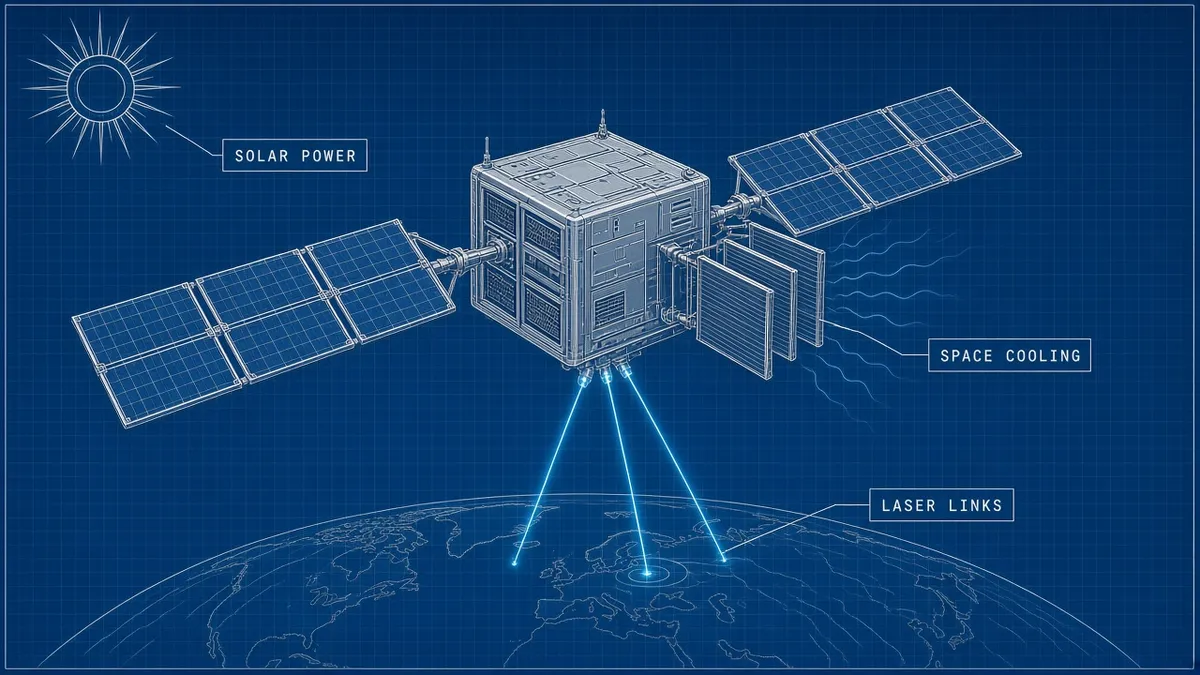
On November 25, 2026, the Federal Communications Commission authorized SpaceX to operate a constellation of one million satellites as data centers in space. The system is called Starmind, and what the agency actually approved is radio use for backup and emergency control. The satellites would pass data mainly by laser. The radios would come on only if those lasers failed.
Ground data centers are already running into physical limits. Power is scarce, cooling uses a lot of energy and water, and a new site can wait years for permits and a hookup to the electrical grid. SpaceX is trying to get around those limits by putting the computers in orbit and pointing them at the sun. That connects directly to the Theory of Constraints, developed by Eli Goldratt. Find what limits how much the operation can deliver, then work on that limit.
On power, SpaceX plans to match its orbits to two kinds of computing demand. Some satellites would fly in paths that follow the sun, keeping them in sunlight more than 99 percent of the time. That cuts way back on batteries and makes them a strong fit for heavy AI workloads that need steady power around the clock. Other satellites would fly on lower paths that pass through sunlight and shadow, where SpaceX can shift work to match demand that rises and falls during the day while giving faster global coverage for live requests.
Cooling is another major drain on the ground, where data centers burn huge amounts of electricity and use billions of gallons of water every year just to keep chips from overheating. In space, there is no air or water to pump around. Instead, the shaded side of the satellite releases heat directly into the cold of space through radiator panels, with no chillers, cooling towers, or fans eating up power or capital.
The data still has to get back to Earth. SpaceX says the satellites would use Starlink laser links to move traffic through the existing network and down to ground stations that are already approved. I wrote in Elon Wants More Frickin' Space Lasers about how those lasers already pass data between satellites and why more of them matter. Radios would be kept as an emergency backup if a satellite could not complete any laser links.
Leaving Earth does not mean leaving all approvals behind. It does mean leaving the local building permit, the fight over land, and the long wait for a grid connection. The new gates are federal. SpaceX now has this FCC license. It still needs FAA approval to launch, and it still has to file a debris plan before it can fly satellites above 600 km. It also has deadlines. It must have one satellite operating by November 25, 2033, 100,000 by November 25, 2035, and 500,000 by November 25, 2038. SpaceX must finish the authorized constellation by November 25, 2040.
None of this works if launch stays too expensive. SpaceX is counting on reusable rockets to bring that cost down, and it has been working on the launch constraint for years. Falcon 9 already flies its first stage and its fairings again, which showed that reuse can lower the cost of getting to orbit. Starship is being built so both stages can fly again and carry a much larger load, which would push launch cost and flight rate even further. In its filing, SpaceX says a fully reusable rocket is what makes the cost comparison work. Even a conservative look at the numbers, it says, shows computing in space beating a data center on the ground.
Getting past the ground limits does not make constraints disappear, it moves them. The next limits are how often Starship actually flies and at what cost, and how large a radiator you can fit on each satellite. SpaceX also has to scale production at its planned factory in Bastrop, and it still needs approval of a debris plan for orbits above 600 km. The filing caps radiator area at under 200 square meters and mass at under 4,000 kilograms. Only the orbits below 600 km, a maximum of 199,880 satellites, can start before that debris plan is filed. A draft filing also lists a five year operating life, which would mean a steady need to replace the hardware.
That is the distinction finance needs to make before approving a capital investment. A capital plan and a total cost of ownership model have to follow the real constraint, not the item that is easiest to fund. If the company solves power, cooling, and permitting by going to orbit, the cost and the schedule now depend on launch rate, reuse, radiator capacity, factory production, and a remaining federal review. Companies that make better capital decisions look for what limits delivery today, and they look again at where that constraint moves once they spend the money.
Originally published on LinkedIn